
Crowd Source Monitoring
Crowd Source Monitoring
The Chesapeake Monitoring Cooperative is always looking for new accessible ways for volunteers to get involved in the world of water monitoring. The programs below are potential opportunities for new volunteers and organizations looking to get started making an impact across the Chesapeake Bay watershed.
Salt Watch
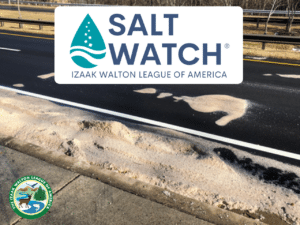
Since 2017, the Izaak Walton League of America has been working to solve road salt pollution issues from the source with their Salt Watch monitoring program. Salt keeps us safe on roads and sidewalks, but it can also pose a threat to fish and wildlife as well as human health. Fish and bugs that live in freshwater streams can’t survive in extra salty water. And many of us (more than 117 million Americans) depend on local streams for drinking water. Water treatment plants are not equipped to filter out the extra salt, so it can end up in your tap water and even corrode your pipes.
The goals of Salt Watch are to raise awareness in the general public about the connection between road salt and public health, to identify waterways with high levels of road salt pollution, and to advocate for smarter road salting practices by sharing Salt Watch results with private landowners and local and state agencies. In 2026 the Chesapeake Monitoring Cooperative worked with the Salt Watch program to develop a first of its kind, crowd source monitoring based quality assurance project plan (QAPP). The now EPA approved QAPP provides increased validity to the methods volunteer scientists will utilize participating in this program.
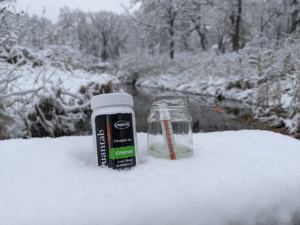
To get involved request a FREE Salt Watch kit and the League will send you everything you need to find out whether road salt pollution is a problem in your local stream. The monitoring process utilizes a calibrated test strip that is both accessible and fast. After collecting a reading, you can view and submit data on the Izaak Walton League’s water monitoring database, the Clean Water Hub.
Chesapeake Water Watch
C hesapeake Water Watch (CWW) was developed by the Smithsonian Environmental Research Center (SERC) and the City College of New York to develop simple to use equipment and smartphone applications that can effectively ground truth and validate satellite data. CWW methods include turbidity and In Vivo Chlorophyll measurements. Turbidity measurements are taken with 3 photos analyzed in a smartphone application called HydroColor and In Vivo Chlorophyll measurements are measured with an unfiltered sample analyzed by a tabletop Aquaflor Fluorometer.
In 2026, the CMC integrated both methods into its Tidal QAPP and data can be entered into the CMC Data Explorer.