
Macroinvertebrates Signal Stream Recovery
Macroinvertebrates Point to Gradual Stream Recovery Across the Bay Watershed
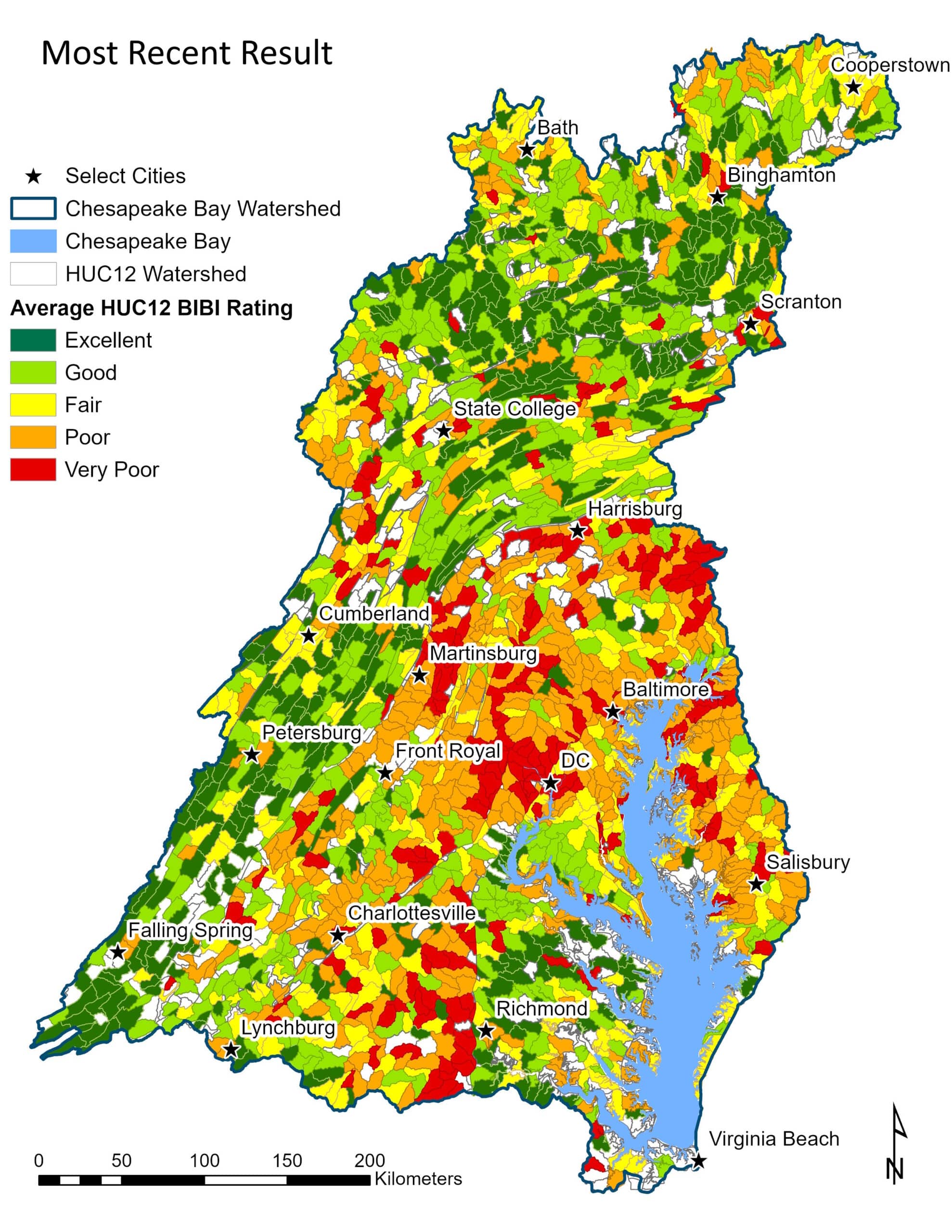
Streams across the Chesapeake Bay watershed are showing slow but steady signs of biological recovery, according to a new report from the Interstate Commission on the Potomac River Basin (ICPRB). The latest update to the Chesapeake Basin-wide Index of Biotic Integrity for stream macroinvertebrates, the Chessie BIBI, documents a 1.4% improvement in overall stream health from 2018 to 2023. This continues a positive trend seen over the past two decades. The Chessie BIBI evaluates stream health using benthic macroinvertebrates such as mayfly, stonefly, and dragonfly larvae. These organisms respond predictably to pollution and habitat conditions, changes in their presence provide a measure of biological health across the watershed. Over the past 25 years, improvements have been documented along nearly 15,000 stream miles, with roughly two-thirds of the Bay watershed’s streams now rated excellent, good, or fair.
Data contributed through the Chesapeake Monitoring Cooperative (CMC) support this watershed-wide assessment. Tier II benthic macroinvertebrate data collected by the CMC service providers, as well as partner organizations are incorporated into the Chessie BIBI, helping strengthen analyses of stream condition and long-term biological trends. These data expand geographic coverage and ensure that community science plays a meaningful role in evaluating the health of the Bay.
While the report highlights encouraging gains, recovery remains uneven. Rural areas tend to show stronger improvement than heavily developed regions, and recent progress was influenced by unusually wet years and monitoring disruptions during the COVID pandemic. As ICPRB prepares the next Chessie BIBI update for 2024 to 2029, continued collaboration among agencies and citizen monitoring programs, including CMC partners, will remain essential to tracking stream health and guiding future restoration efforts.